
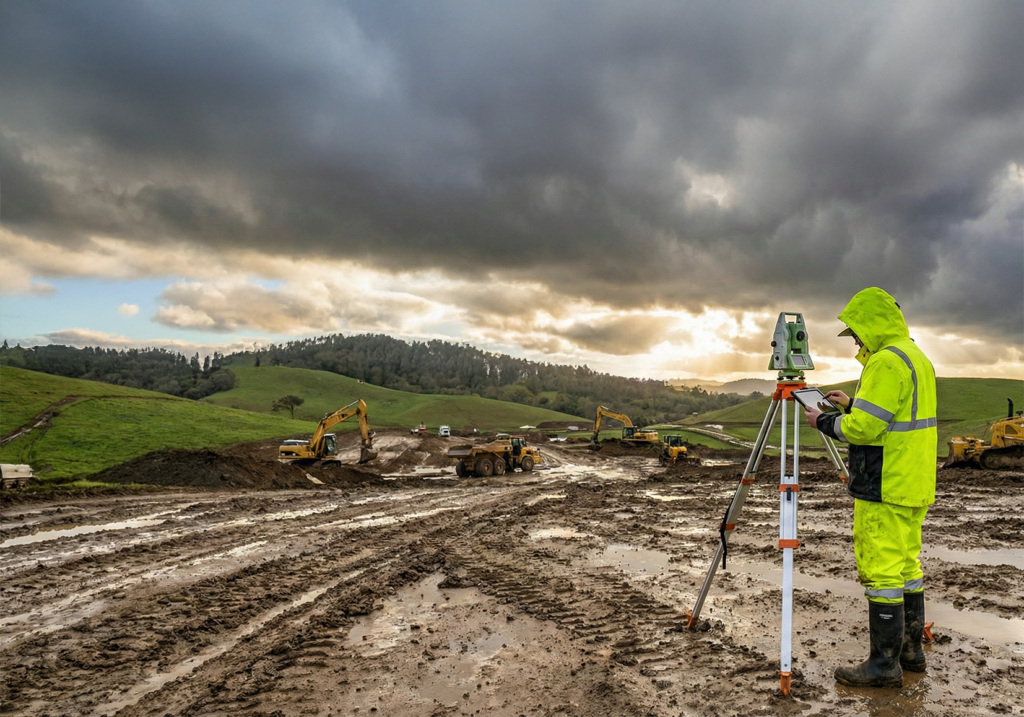
The mud is drying, the days are getting longer, and bid packages are turning into active job numbers. In our industry, “Spring Cleaning” isn’t about dusting off shelves—it’s about clearing the path for a chaotic Q2.
For General Contractors, Architects, and Excavators, this season isn’t about organizational neatness; it is about intense operational readiness that clears the path for a chaotic second quarter. The transition from theoretical plans to the first physical spring break-ground is fraught with a singular, schedule-shattering danger: the pressure to get moving.
As the skies clear, the entire chain of command demands mobilization “yesterday.” But rushing the project’s foundation—the site data and the initial layout—is the most reliable method for guaranteeing a costly rework rerun in August. This spring, we are urging our partners to treat their site data with the same rigorous control as they treat their contracts. We must shift the site strategy from a low-bid, analog, “good enough” approach to a digital-first operation that builds a foundation of data for the entire project.
I. The High Stakes of “Good Enough”: A Fable of Compounded Errors
We have all seen it happen. A project gets the “go,” the weather breaks, and a rushed initial layout is completed with traditional “tape measure” precision rather than digital accuracy. The team, successful that they broke ground on schedule, proceeds into foundation work, steel fabrication, and framing.
Three months later, the disastrous domino effect is revealed. The steel erection crew arrives, but the fabricated structural steel beams fail to align with the anchor bolts in the foundation. This isn’t a “mistake;” it’s a catastrophic foundational failure originating in that “good enough” initial layout. A one-inch error at the foundation, compounded over a hundred feet of steel, is a three-inch misalignment that stops a project, costs weeks of schedule, and demands legal, dispute-ridden recalculations. The “savings” from rushing the initial layout are exposed as a myth.
II. Customizing the Strategy: The Value Proposition for Key Stakeholders
A robust spring site strategy is a collaborative effort customized to provide specific, verifiable value to each stakeholder.
1. For the Architects: Literal Translation and Design Integrity Assurance
For the architect, the digital site strategy is the literal physical translation of months of design intent. Their creativity and technical skill, crafted in advanced design software, must be perfectly manifest in the earth.
A robust spring site strategy must begin with a complete, digitally verified ‘existing conditions’ survey. This is not a task; it is an irrefutable verification that translates design intent into a high-fidelity physical model. Digital verification means your vision is protected from the first scoop of dirt. It means flagging discrepancies between site conditions and the design model before any construction begins, preventing the costly mid-project redesigns that architects dread. This isn’t just a survey; it is Design Integrity Assurance.
2. For the Excavators: Operational Precision, Not Guesswork and Grout
For the excavator, the traditional low-bid mentality is “close enough.” If you hit the general building pad within a few inches, you call it good. But in a chaotic Q2, this mentality is a massive cost sink. Operators are guessing, costing you your two most finite resources: fuel and time.
A digital site strategy transforms excavation into a precision operation. With 1/8″ accuracy, you move exactly the dirt you need to move—no more, no less. This prevents the over-excavation that forces you to pay for structural fill and the under-excavation that requires crews for manual cleanup. Getting this 3D model framework in place means you increase profitability and machine utilization. You are installing precision, not just clearing mud.
3. For the General Contractors: The Digital Twin as a Legal and Dispute Shield
The GC is the conductor who must prevent rework. Their site strategy cannot be a delegated task; it must be a centralized, controlled, digital audit trail.
If a property line setback or dispute arises, you don’t want a field notebook; you want a timestamped, geo-referenced digital map that proves you were right from day one. Creating a “digital twin” of the project foundation provides situational awareness and serves as a legal and dispute shield. This digital audit trail offers your only defense against compounded errors and ensures you have the verifiable data to hold subcontractors accountable.
III. Quantifying the Bottleneck: The Hidden Cost of Waiting
The construction industry faces an annual crisis we call “The Spring Rush.” Every project attempts to mobilize simultaneously, hitting a finite supply of surveying and high-precision layout resources. By mid-April, layout crews are typically booked solid. Waiting until excavators are idling to schedule your layout is actively gambling with your schedule.
The costs of this gamble are significant and quantifiable:
- Massive Scheduling Delays: Waiting weeks for an available crew can loss your window, compounding delays for months.
- Rushed Errors: Crews, pressured by multiple screaming projects, have less time for the QA/QC that prevents reworks.
- Lack of Digital Twin: To save time, projects skip creating the audit trail and data needed to prevent rework. You save hours today at the cost of weeks tomorrow.
Conclusion: Let’s Get To Work, Not to Panic
Construction is ramping up. You’ve planned your Q2 project slate for a banner year. Don’t waste that planning by failing at operational mobilization.
Treat your site data with the same rigor as your contracts. Lock in your digital audit trail, legal shield, Design Integrity Assurance, and 1/8″ accuracy now before the rush hits. Don’t wait for the panic call in April, when the mud is dry, the excavators are idling, and your client is demanding progress. Contact us today to secure your spring layout needs.